Sunday, October 10, 2010

Arlington Natural Connections Website Now ONLINE!


The Arlington Natural Connections Project is pleased to announce that our website is now available online at

NaturalConnectionsProject.com

The home page currently features our "Scenes of the Season" photo calendar, with pictures showing seasonal changes in Arlington (and nearby) in 2010.

Check in often for ideas about connecting to nature, in Arlington Massachusetts. You may also consider signing up for updates from our Arlington Natural Connections weblog.

The mission of the Arlington Natural Connections Project is to promote a sense of connection to the natural world at the local level by combining an artistic and natural science approach.

The Arlington Natural Connections Project is grateful for funding provided by the Arlington Cultural Council, a local agency supported by the Massachusetts Cultural Council, a state agency.

~

First Visit to Wright-Lock Farm

The Wright-Lock Farm is located in Arlington's backyard, just north of the Winchester line at 78 Ridge Road. Established in 1638, it is the oldest continuously farmed property inside Route 128. The town of Winchester purchased the property in 2007. The Wright-Lock Farm Conservancy was created by a vote at the Spring 2008 Winchester Town Meeting to continue limited farming operations, develop passive recreational opportunities, sponsor educational programs, and preserve the historic landscape. The farm now welcomes the public to a treasure of hillsides and paths connecting to the Whipple Hill and Locke Conservation areas. During summer a self-pick raspberry operation is becoming a favorite attraction.

RASPBERRY FIELDS at the WRIGHT-LOCK FARM
~ ~ ~ ~ ~ ~ ~ ~ ~ ~ ~ ~ ~ ~ ~ ~ ~ ~ ~ ~ ~ ~ ~ ~ ~ ~ ~

On Sunday October 10, as part of Winchester's Week of Environmental Awareness and Action, Alan Field led a tour through the paths and farm structures. Fall color was just beginning to come to the trees, the sun was warm, the air was crisp, a perfect fall day.

GRASSY MEADOWS, SQUARE WELL and POND
~ ~ ~ ~ ~ ~ ~ ~ ~ ~ ~ ~ ~ ~ ~ ~ ~ ~ ~ ~ ~ ~ ~ ~ ~

LOOKING BACK TOWARD THE BARNS FROM UP THE HILL
~ ~ ~ ~ ~ ~ ~ ~ ~ ~ ~ ~ ~ ~ ~ ~ ~ ~ ~ ~ ~ ~ ~ ~ ~ ~ ~ ~ ~ ~ ~ ~ ~

YELLOW FLOWERS ON A GRASSY HILLSIDE (SNAPDRAGONS?)
~ ~ ~ ~ ~ ~ ~ ~ ~ ~ ~ ~ ~ ~ ~ ~ ~ ~ ~ ~ ~ ~ ~ ~ ~ ~ ~ ~ ~ ~ ~ ~ ~ ~ ~

The property has many peaceful paths, with the din of city noise and vehicles almost imperceptible.


The circular horse riding area is a relatively recent but picturesque addition. The barn to the left in the photo was built in 1827 for animals, wagons and farm equipment, some of which still remains. The Squash House to the right was built in 1915 to store and protect squash from freezing, so that it could be taken to Boston in winter, using a massive sled over icy fields and roads. The farm was known for Blue Hubbard squash, which is still grown there today.

1827 BARN (LEFT) - 1915 SQUASH HOUSE (RIGHT)
~ ~ ~ ~ ~ ~ ~ ~ ~ ~ ~ ~ ~ ~ ~ ~ ~ ~ ~ ~ ~ ~ ~ ~ ~ ~ ~ ~

RAILS of SLED USED TO TAKE HUBBARD SQUASH to BOSTON MARKETS
~ ~ ~ ~ ~ ~ ~ ~ ~ ~ ~ ~ ~ ~ ~ ~ ~ ~ ~ ~ ~ ~ ~ ~ ~ ~ ~ ~ ~ ~ ~

OLD FARM EQUIPMENT STILL IN 1827 BARN
~ ~ ~ ~ ~ ~ ~ ~ ~ ~ ~ ~ ~ ~ ~ ~ ~ ~ ~ ~ ~ ~ ~ ~ ~

ALAN FIELD OPENING DOOR TO SQUASH HOUSE BARN
~ ~ ~ ~ ~ ~ ~ ~ ~ ~ ~ ~ ~ ~ ~ ~ ~ ~ ~ ~ ~ ~ ~ ~ ~ ~ ~ ~ ~ ~ ~

STORAGE RACKS FOR BLUE HUBBARD SQUASH IN 1915 SQUASH HOUSE
~ ~ ~ ~ ~ ~ ~ ~ ~ ~ ~ ~ ~ ~ ~ ~ ~ ~ ~ ~ ~ ~ ~ ~ ~ ~ ~ ~ ~ ~ ~ ~

The town of Winchester has shown great vision and conviction by purchasing this historic property and establishing a citizen-based volunteer conservancy. A number of plans have been put forth for housing and mixed use. While these uses might provide a financial return on the investment, the benefits of emphasizing preservation of this stunning natural area and historical treasure hopefully will take precedence. In the meantime I plan to take full advantage of proximity, and visit often.

One can support The Wright-Locke Farm Conservancy at their website. They also have occasional fundraisers, like an Open House on October 17 2010 featuring tours of the barn and it's contents by John Ott, former Director of the National Heritage Museum. I first learned about the farm at the Saturday morning Winchester Farmers Market, on the Winchester Town Square until October 30.

Thank you Alan Field for your efforts at the farm, your service as a Conservancy Board Member, and a great walk and tour.

Posted by Picasa

Sunday, January 24, 2010

Written in Stone - New England Geology

After Ed Myskowski piqued my interest in the geology of New England, I borrowed "Written in Stone" by Chet and Maureen Raymo from the Arlington Robbins Library. A great introduction to the geology of New England. Plate tectonics is central to the discussion. It has changed my whole conception of time, and how mountains, lakes, rivers and valleys formed.

I had heard about "Pangea" the super-continent, but hadn't heard about how the continents were arranged before they coalesced to form Pangea. As impressive as our mountains are now, this book describes how before Pangea a mountain range rivaling the Himalayans stood along what is now the East Coast of North America. At the time though, this land was located near the equator.

The continents have joined and separated, plant and animal species have come and gone, rocks have formed, compressed and changed, mountains have been thrust up and have eroded to plains. In geologically recent times, the land has been shaped and tilled by glaciers. In the last few moments of geologic time, a creature with an unusually large brain has walked the earth. The longevity of this species is to be determined, over the next few 100 millions of years.

For a great animation of the tectonic movements of the earth's land masses, leading to our current continents, see this Animation from UC Berkeley . Note that you can step through the sequence slowly with the left/right arrow keys. Watch Florida float into place at about 430-270 (million years ago) and India zoom up and slam into Asia starting about 120 million years ago.

Added on 6 Mar 2010: A video dramatization and Plate Tectonics primer:

Sunday, December 6, 2009

Geology Hike at Middlesex Fells

"Because it helps you build up a relationship to the earth in a mysterious kind of way ..."
On Saturday morning December 5, ~30 people gathered at Bellevue Pond in the Middlesex Fells for a Geology Hike sponsored by the Friends of the Fells and led by Ed Myskowski of the Peabody Essex Museum. Ed is friendly and knowledgeable, happy to share his considerable insight into the geology of New England. Before setting out he covered the basics of plate tectonics and the effects of glaciers on the New England landscape. He even delved into recent theories proposing that periodic variation in the earth's tilt (varying between 21-24 degrees, with a period of 40,000 yrs) is responsible for the historical cycles of glaciation observed (~100,000 yr period), and discussed possible implications for climate change in the future. Ed is pictured below with a gabbro boulder that seems to have been conveniently placed alongside the pond for demonstration purposes. This type of rock is ~600 million years old, sometimes called "country rock", meaning, a component of the local bedrock. It formed at a time when the continents were still connected in a big land mass (called Pangea). New England was butted up into what is now north-western Africa.
Igneous rocks (from molten magma far below the surface) make up some of the more interesting formations in the Fells. While the varying compositions and formation mechanisms are complicated enough to be the lifetime work of many geologists, their beauty is easy to grasp. Ed told a great story about talking to a group of young school children about igneous rocks. It seemed to Ed their attention was drifting, so he asked "but why should we care about igneous rocks?". A reply came back: "because it helps you build up a relationship with the earth in a mysterious kind of way". I bet Ed felt great about his work with kids on THAT day.

The word "Fells" is an English word for "rocky windblown hills". Formations as shown below give character to the terrain, making for enjoyable hiking. The numerous paths are also favored by runners.
Our hike took us to Wright's Tower on the south-eastern tip of the West side of the Fells. Great views of the Boston Skyline, and the site of the ancient Boston Caldera. (That's another story, that Ed will talk about on February 9 2010, watch the Friends of Fells site for details).
I like the combination of the natural Lynn rhyolite rock feature and the man-made stairs and tower.
I can almost still see the swirling magma flows in this rock, and the glacial scratches.

And wow, does it confuse a compass - the white line painted on the rock in the photo below runs North/South. As you can see, the compass points almost due west!

One of the most clear examples of a dike, where magma has intruded into cracks in the bedrock. Some grass has grown where the two rock types meet, providing an even better marking of the division.
Click on any of the photos for more detail.
Posted by Picasa

Sunday, November 29, 2009

Winter Moths

The Winter Moth have definitely arrived in Arlington MA. These photos were taken the evening of November 25 2009. The male moths shown are attracted to light and to the wingless females. After mating, eggs are laid in tree bark crevices, under lichen and elsewhere. In the spring the eggs hatch and release tiny and destructive caterpillars (larvae). They eat tree leaves, dropping their droppings below, and swing down and sideways onto other trees by filaments. They are destructive to oaks, apple trees, roses, other perennials, and are the bane of blueberry growers in coastal areas, inflicting considerable economic damage. You may have seen swarms of these when driving at night or raking leaves.


For more information, see the excellent U Mass Extension Fact Sheet
by Robert Childs and Deborah Swanson.
Posted by Picasa

Thursday, November 26, 2009

Middlesex Fells - Thanksgiving 2009

Thanksgiving 2009, Arlington MA - a morning with fog so dense and white that trees just a block away faded into mist. Damp but fragrant air, temperatures in the mid 40's. A great day for a walk in the Middlesex Fells, a natural treasure just around the corner in Medford.
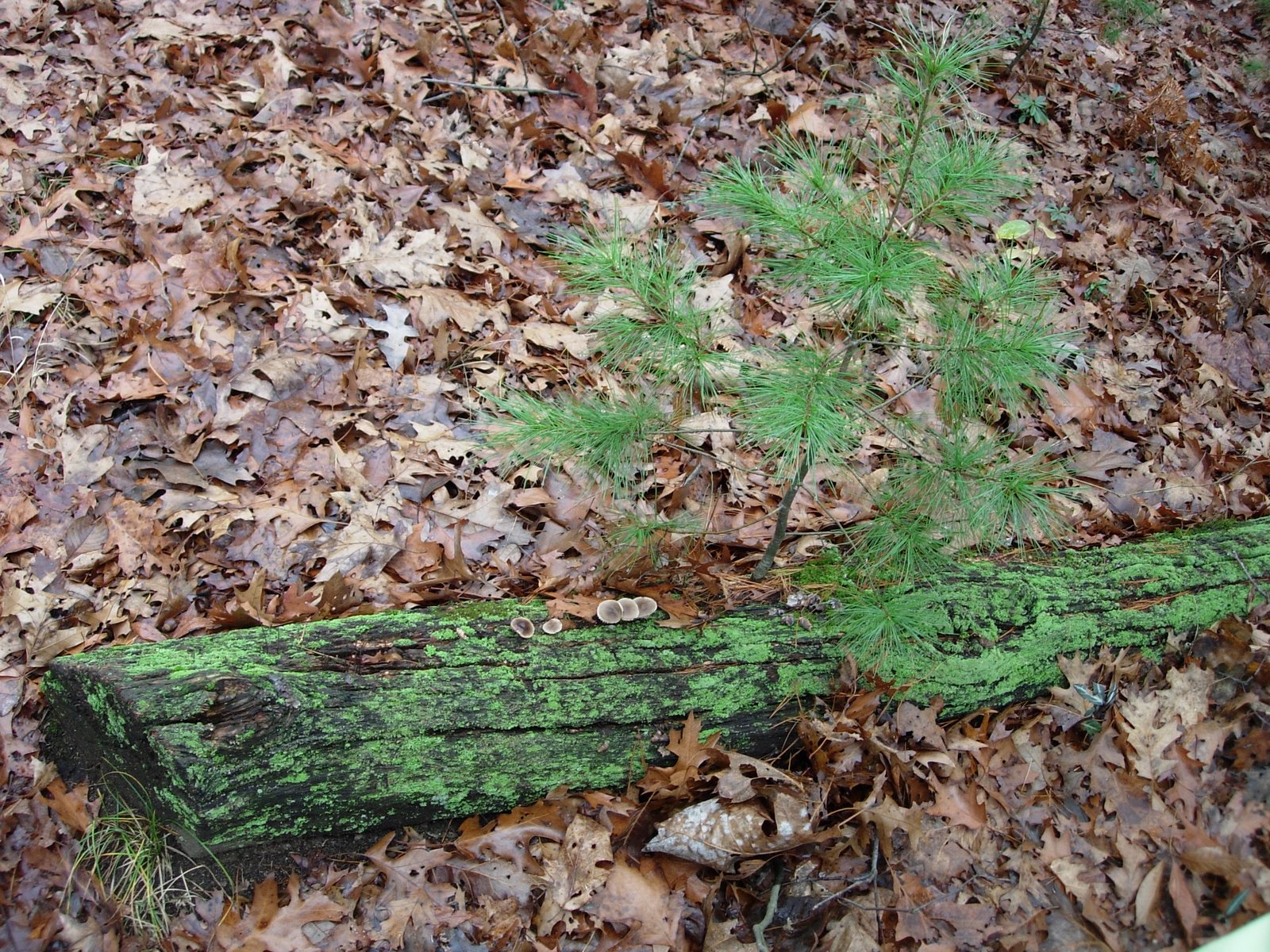
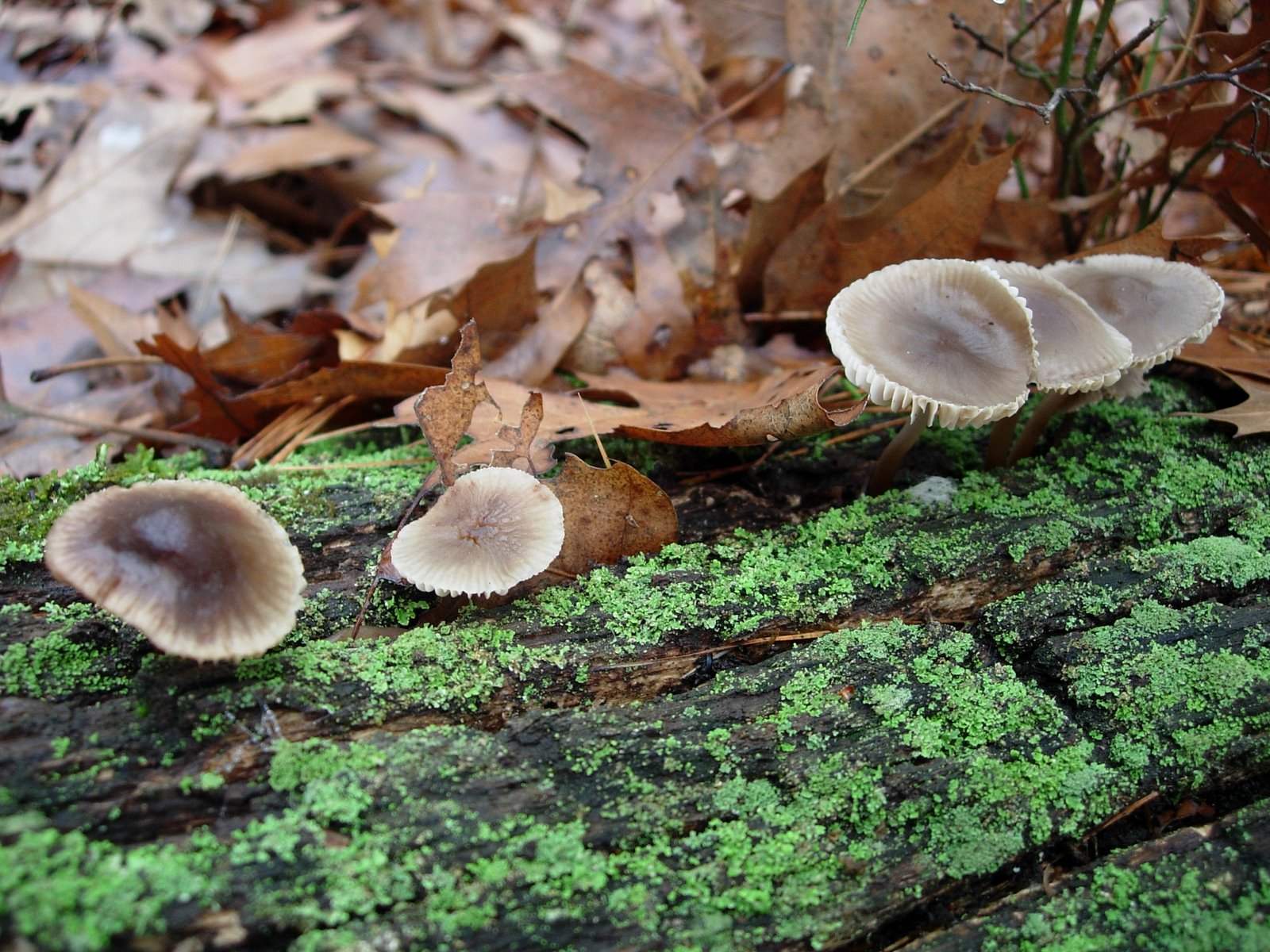
The light on this cloudy day illuminated mossy logs and lichen-covered rocks in a magical way. The photos show a "nurse log", supporting vibrant green moss, a pine seedling, and a small community of healthy fungi. A tiny wintergreen (pipsissewa) grows alongside - it will provide a welcome green all through the winter.


We traversed many small hills and ravines. A pervasive quiet, and sounds of birds left the din of civilization fading into the background. At one point we paused, hearing the sound of something dropping from trees. Might it be just water droplets? Looking skyward, we saw birds feeding on catkins in a tall birch tree. We were hearing the sounds of bits falling from these crumbling catkins as they hit the brown crinkly leaves covering the ground. I had never experienced this before. Nature will always surprise and delight.
You may click on the photos above for a larger image.
The Route: Start at the smaller Parking area just south of the Long Pond Parking area on South Border Road, on the west border of the Fells. Proceed south along the Skyline Trail, about 1/4 mile to where it joins the Reservoir trail. Take the Reservoir trial north for about a mile, to north of Nanepashemet Hill, where it crosses the Skyline trail. Take the Skyline trail left, turning south for the return trip. While the trails are very well marked with white and orange blazes (small squares on the trees and painted on rocks), having the excellent map and guide published by the Friends of the Fells is essential for not getting lost in the Fells (not that getting lost is all that bad).
Posted by Picasa

Wednesday, April 1, 2009

Seasonal Scenes: Jan-Feb-March 2009

The winter of 2008-2009 brought us our share of snow and cold in Arlington MA, but many days were also sunny. Getting out into nature was always restorative and much needed. The video below shows typical nature scenes in Arlington and vicinity at this time of year. Relax and enjoy the scenes and music. Most importantly though, there is no substitute for getting out and experiencing nature first-hand. The video shows several places in or very near to Arlington that are wonderful places to explore.


The Arlington Natural Connections Project would appreciate receiving contributions of photos that document nature in the current season. Select photos may be displayed in on-line galleries, photo collage videos or other works created as activities of the Arlington Natural Connections Project. The contributing photographer will be credited, unless anonymity is requested. Please include: place, date, time (optional) the photo was taken, and the photographer to credit. Submission of photos is taken as permission to use in these venues.

Please submit digital photo files to:

joe@naturalconnectionsproject.com

The mission of the Arlington Natural Connections Project is to promote a sense of connection to the natural world by combining an artistic and natural science approach.